“Prevention is better than cure”
With the continued growth of aquaculture, hundreds of thousands of fish are raised in confined spaces and in close proximity to each other. As a result, infectious fish diseases are spreading faster than ever before.
All aquaculture facilities are vulnerable to disease outbreaks because many opportunistic disease-causing bacteria, viruses, fungi and parasites are present in the environment or may be found on some fish that are not showing signs of disease. Vaccination is a proven, cost-effective method to prevent infectious diseases in animals.
Download Sample PDF Copy of This Study
Importance of vaccination
- Vaccines are not the same as antibiotics and generally will not be effective for stopping a disease outbreak once it has begun.
- Vaccines are used to prevent a specific disease outbreak from occurring and are not a therapy.
- Its efficiency exists for a longer duration with one or more treatments.
- No toxic side effects and healthy fish have better growth performance.
- No accumulation of toxic residues
- Pathogen will not develop resistance.
- Theoretically it can control any bacterial and viral disease.
- No environmental impact.
Recent development in fish vaccinology
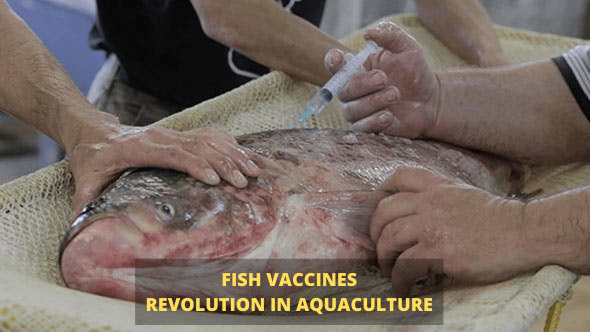
During the last two decades vaccination has become established as an important method for prevention of infectious diseases in farmed fish, mainly salmonid species. So far, most commercial vaccines have been inactivated vaccines administered by injection or immersion. Bacterial infections caused by Gram-negative bacteria such as Vibrio sp., Aeromonas sp., and Yersinia sp. have been effectively controlled by vaccination. With furunculosis, the success is attributed to the use of injectable vaccines containing adjuvants. Vaccines against virus infections, including infectious pancreatic necrosis, have also been used in commercial fish farming. Vaccines against several other bacterial and viral infections have been studied and found to be technically feasible. The overall positive effect of vaccination in farmed fish is reduced mortality. However, for the future of the fish farming industry it is also important that vaccination contributes to a sustainable biological production with negligible consumption of antibiotics.
Dominated Players in Aquaculture Vaccines are
Benchmark Holdings plc, HIPRA, Intervet Inc. (Merck & Co. Inc.), Nisseiken Co., Ltd., Ridgeway Biologicals Ltd, Company (IDT Biologika), Tecnovax, Vaccibody AS, VETERQUIMICA SA, Virbac, Zoetis
For more info, get sample copy of this study here
References:
- https://www.theinsightpartners.com/reports/aquaculture-vaccines-market
- quaculturealliance.org

